
Skin cancer is the most common form of cancer in the United States, and one in five Americans is expected to develop skin cancer during their lifetime. Basal cell carcinoma, squamous cell carcinoma, and melanoma can look different, so watch for new, changing, or unusual areas of skin. When detected and treated early, many skin cancers are highly treatable.
At Musick Dermatology & Advanced Clinical Spa in Swansea, board-certified dermatologist Dr. Steven Musick provides medical and surgical care for skin conditions, including skin cancer. With decades of dermatology experience and a team of medical dermatology providers, the practice offers evaluation, diagnosis, treatment, and ongoing skin surveillance based on each patient’s individual risk factors.
The three primary types of skin cancer include:
Basal Cell Carcinoma
Basal cell carcinoma is the most common type of skin cancer. It develops from basal cells in the lower portion of the epidermis and is strongly associated with ultraviolet exposure. These cancers usually grow slowly and rarely spread to distant areas of the body, but treatment is still important because an untreated lesion can damage surrounding tissue.
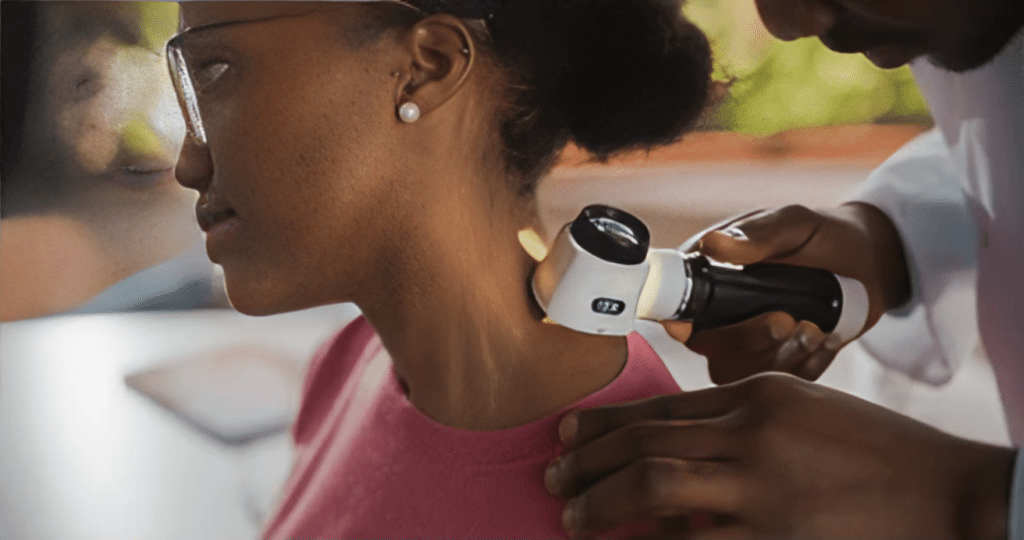
Basal cell carcinoma can appear in several ways, including:
- A raised pink or pearly bump with visible blood vessels
- A pigmented growth that resembles a mole
- A sore that repeatedly heals and reopens
- A flat, scaly, scar-like area with poorly defined edges
- A growth that bleeds with little or no obvious cause
Basal cell carcinomas frequently develop on sun-exposed areas such as the face, scalp, neck, and ears.
Risk factors include fair skin, significant cumulative sun exposure, indoor tanning, increasing age, a history of skin cancer, and certain forms of radiation exposure.
Diagnosing Basal Cell Carcinoma
A suspicious lesion may be evaluated with a skin biopsy. The type of biopsy depends on the lesion’s size, location, and appearance. The tissue is then examined to determine whether cancer cells are present and help guide appropriate treatment.
Squamous Cell Carcinoma
Squamous cell carcinoma develops from squamous cells located near the surface of the epidermis. It may appear as a crusted or scaly patch, a firm growth, or a sore with an inflamed or red base. Some lesions can also feel tender.
Squamous cell carcinoma commonly develops on areas that receive frequent sun exposure, including the scalp, face, ears, neck, forearms, and backs of the hands. It may also occur in less exposed areas.
Some squamous cell carcinomas develop from actinic keratoses, which are rough or scaly precancerous lesions caused by accumulated sun damage. Because squamous cell carcinoma has the potential to grow deeper or spread in some cases, early diagnosis is important.
Diagnosing Squamous Cell Carcinoma
Squamous cell carcinoma is diagnosed with a skin biopsy. Depending on the lesion, your provider may remove part or all of the suspicious tissue for examination. The biopsy results help determine the diagnosis and appropriate next steps.
Treatment Options for Basal Cell and Squamous Cell Carcinoma
Treatment depends on the cancer type, size, depth, location, and other individual factors. Options may include:
- Cryosurgery, which uses liquid nitrogen to freeze selected superficial lesions
- Curettage and electrodesiccation, which removes cancerous tissue and treats the area with an electric current
- Mohs micrographic surgery, which removes cancer in layers while examining tissue during the procedure
- Prescription topical medications for certain superficial skin cancers
- Superficial radiation therapy for selected lesions based on location or other treatment considerations
- Surgical excision to remove the cancer along with an appropriate margin of surrounding tissue
Melanoma
Melanoma develops from melanocytes, the cells that produce pigment in the skin. Although it is less common than basal cell and squamous cell carcinoma, melanoma can be more serious because it has a greater potential to spread to other parts of the body.
Melanoma may develop in an existing mole or appear as a new pigmented lesion. Watch for spots that change in color, shape, size, or texture, or that look noticeably different from other moles.
Melanoma is diagnosed through biopsy. Treatment is selected based on how advanced the melanoma is and whether nearby or distant tissues are involved. Early melanoma is commonly treated surgically, while more advanced disease may require additional evaluation and treatment.
How Can You Check Your Skin for Signs of Skin Cancer?
Regular self-examinations can help you learn what is normal for your skin and make it easier to notice changes.
Watch for:
- Large brown, black, or red spots
- Dark lesions on the palms, soles, fingers, toes, mouth, or other less-exposed areas
- Pearly or dome-shaped growths
- Existing moles that begin to grow, itch, change, or bleed
- Brown or black streaks beneath the nails
- A sore that repeatedly heals and reopens
- Persistent clusters of scaly pink or red lesions
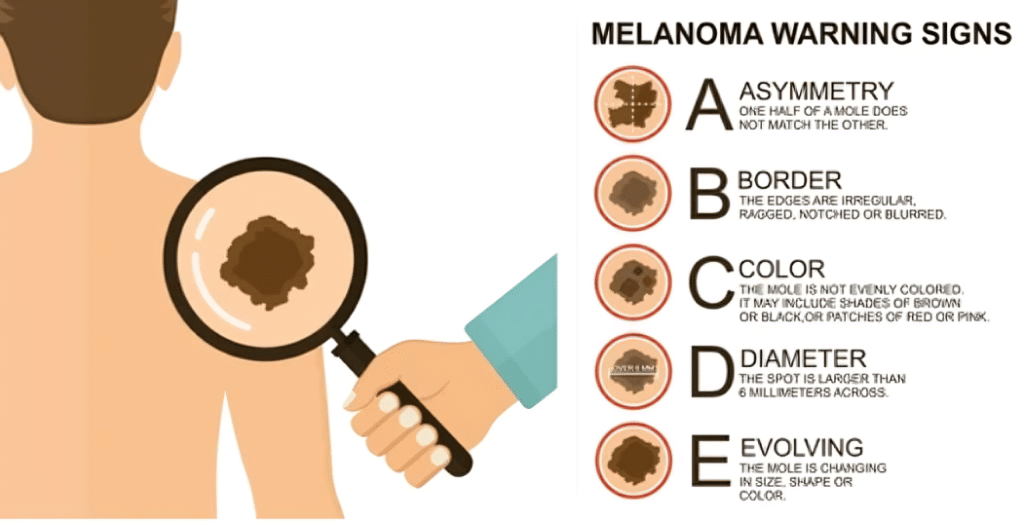
The ABCDE guide can also help identify features that may warrant evaluation:
- Asymmetry: One half does not match the other
- Border: Edges are irregular, scalloped, or poorly defined
- Color: More than one color or uneven pigmentation is present
- Diameter: The lesion may be larger than 6 millimeters, although melanomas can also be smaller
- Evolving: The lesion changes in size, shape, color, texture, or appearance
A lesion does not need to meet every ABCDE characteristic to deserve attention. Discuss any new or changing spot with a dermatology provider.
When Should You Have a Suspicious Spot Checked?
Skin cancer does not always resemble a dramatic or obvious lesion. Some cancers may initially look like a small sore, scaly patch, shiny bump, changing mole, or area that simply does not heal normally.
Consider scheduling a dermatologic evaluation if you notice:
- A new growth or spot that looks different from others on your skin
- A mole that changes in size, shape, or color
- A lesion that repeatedly bleeds, crusts, heals, and returns
- A persistent rough or scaly patch
- A spot that begins itching, hurting, or becoming tender
- A rapidly changing or growing lesion
Anyone can develop skin cancer. Personal history, family history, cumulative sun exposure, indoor tanning, and other individual factors can influence how closely you should monitor your skin.
What Happens If a Biopsy Shows Skin Cancer?
A biopsy confirms whether suspicious tissue contains cancer cells and provides information that helps guide treatment. The appropriate next step depends on the type of skin cancer, its location and size, biopsy findings, and other individual factors.
Treatment may involve an office-based procedure, surgical removal, topical medication, radiation therapy, or referral for additional care depending on the diagnosis. Melanoma treatment is based in part on how deeply the cancer has grown and whether there are signs that it has spread.
Patients with a history of skin cancer may benefit from regular follow-up exams to monitor for new or returning lesions.
Skin Cancer Prevention
Reducing ultraviolet exposure can lower the risk of developing many forms of skin cancer. Helpful preventive measures include:
- Seek shade and reduce time in direct sunlight during the strongest midday hours
- Cover exposed skin with protective clothing, along with a wide-brimmed hat and sunglasses
- Apply a broad-spectrum sunscreen with SPF 30 or higher to exposed areas
- Reapply sunscreen regularly, particularly after swimming, sweating, or prolonged outdoor activity
- Avoid tanning beds and other sources of artificial ultraviolet light
- Perform regular skin checks to look for new, changing, or unusual spots
- Talk with your dermatology provider about how often you should have professional skin exams based on your personal risk factors
Why Choose Musick Dermatology & Advanced Clinical Spa for Skin Cancer Care?
Musick Dermatology & Advanced Clinical Spa combines decades of dermatology experience with a medical team equipped to evaluate suspicious skin changes, perform biopsies, treat skin cancers, and provide ongoing surveillance.
Dr. Steven Musick is board-certified in dermatology and provides medical and surgical dermatologic care for disorders of the skin, hair, and nails. The broader medical dermatology team also includes experienced providers who perform skin examinations, biopsies, excisions, and other office-based procedures. Care is tailored to the lesion type, its location, biopsy findings, and each patient’s medical history and risk factors.
Patients in Swansea and surrounding Illinois communities can receive skin cancer evaluation and treatment within a practice focused on early detection, appropriate treatment, patient education, and long-term skin health.
Schedule a Skin Cancer Evaluation in Swansea, IL
New, changing, or persistent skin lesions should be evaluated rather than ignored. Musick Dermatology & Advanced Clinical Spa provides skin cancer screening, diagnosis, treatment, and follow-up care for patients in Swansea, O’Fallon, and surrounding Illinois communities.
Call 618-628-2588 to schedule a consultation for a concerning spot or other skin change.